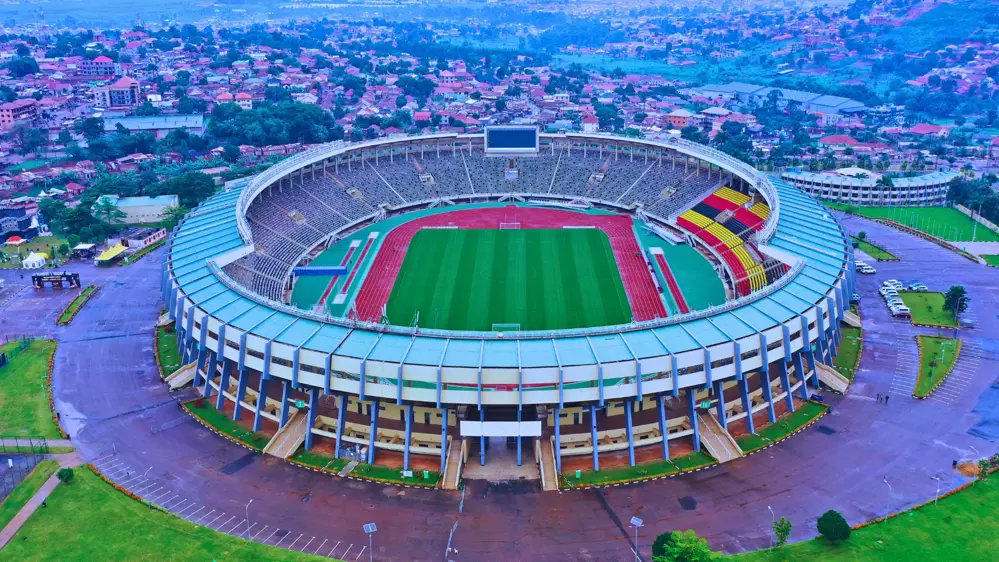

The Ugandan government has earmarked $60 million (approximately UGX 225 billion) for the second phase of redevelopment works at Mandela National Stadium as part of efforts to align the facility with Confederation of African Football (CAF) requirements.
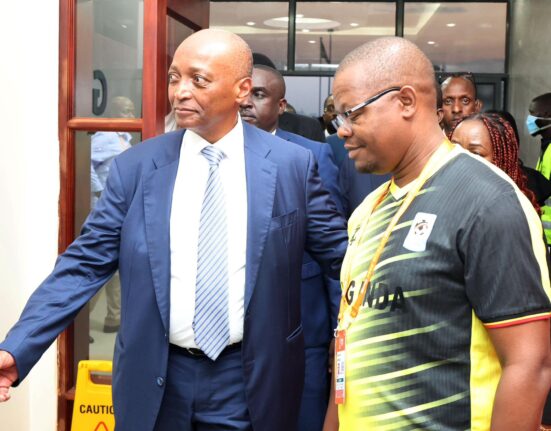
State Minister for Sports Peter Ogwang revealed the development during an appearance on NBS Sport, confirming that preparations are underway to commence the next stage of renovations.
According to Ogwang, the government has already engaged the UPDF Engineering Brigade as the lead contractor, working alongside the Ministry of Works as the supervising body. He noted that the contract is in its final clearance stages, after which the site will be handed back to the UPDF team to begin the upgrade works.
The minister emphasized that the refurbishment will strictly follow CAF guidelines, pointing out that the stadium’s current design is outdated.
“Namboole was designed in the 1970s, but we are now operating in a modern era with evolving standards. This upgrade is necessary to meet the demands of today’s game,” Ogwang explained.
As part of the planned improvements, the stadium’s seating capacity will be boosted by approximately 8,000 seats.
However, Ogwang admitted that the renovation presents significant technical challenges, noting that refurbishing an existing structure is often more complex than constructing a new facility from scratch.
The redevelopment comes at a critical time as Uganda prepares to co-host the 2027 Africa Cup of Nations alongside Kenya and Tanzania.
A recent inspection by Confederation of African Football raised concerns about the readiness of the three host nations. In its assessment, CAF highlighted significant compliance gaps at Mandela National Stadium, particularly in relation to Category 4 requirements.
The continental body recommended a comprehensive upgrade plan, including partial demolition of the West Stand, structural expansion, and replacement of the stadium roof.
However, CAF cautioned that the initially proposed 15-month construction timeline may not be feasible ahead of the tournament.
To address this, CAF advised a revised approach that prioritizes retaining the existing structural framework while accelerating construction works to ensure completion by December 2026.