
Physical confrontation with match officials remains one of the most serious offences in modern football, often attracting the toughest punishments available within the game. These strict measures are essential—they protect referees and ensure they can perform their duties without fear, intimidation, or harm.
However, while safeguarding referees is non-negotiable, it should not translate into a lack of accountability. Match officials, though a relatively small group, play a decisive role in the integrity of the sport. Like players and coaches, they must be subject to fair and structured oversight. The real question, therefore, is not whether referees should be sanctioned—but how those sanctions should be handled.
The Problem with Public Sanctions
Recent disciplinary actions against referees have sparked debate, particularly due to their public nature. While the intention may be to promote transparency, openly sanctioning officials risks exposing them to unnecessary criticism and undermining their authority.
Take the Buhimba fixture, for example, where the entire officiating team was penalized—not for a controversial match decision—but for permitting a player to feature in an incorrect jersey. Though administrative in nature, the error was deemed serious enough to bring the game into disrepute.
In separate incidents, referees Immaculate Ongeria and Emmanuel Okudra were sanctioned after disallowing legitimate goals for offside in matches involving SC Villa. These were clear officiating errors, and disciplinary action was justified. Yet, making these sanctions public raises concerns about consistency and intent.
Inconsistency in Enforcement
Refereeing mistakes are not rare—they occur almost every matchday, both locally and internationally. However, not all errors attract the same level of scrutiny or punishment.
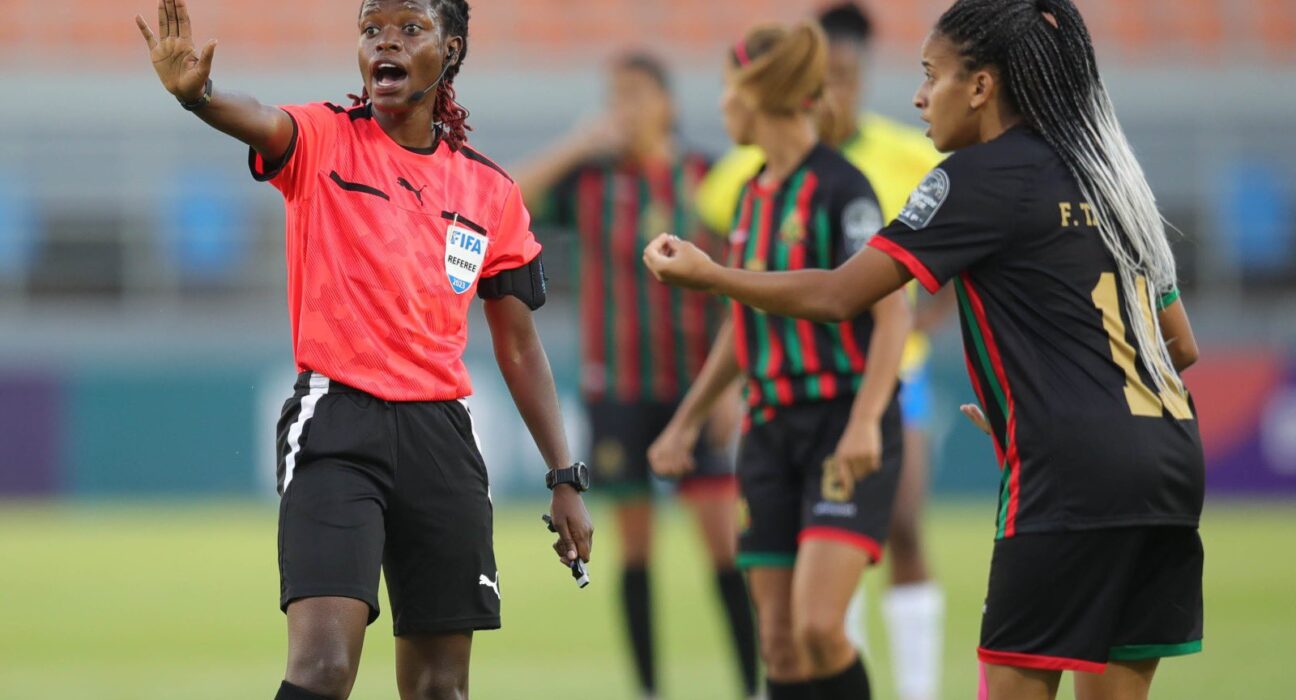
In one instance, during a BUL vs SC Villa clash, referee George Olemu reportedly missed two clear penalty incidents—one for each team. In another match between NEC and Kitara, a controversial penalty decision altered the game’s outcome. Similarly, in the Vipers vs NEC encounter, Enock Ssebagala escaped a potential red card under the watch of FIFA referee Shamira Nabada.
Despite the significance of these decisions, none resulted in public sanctions. This selective approach raises legitimate questions: why are some officials publicly disciplined while others are not, even when their decisions have equally direct consequences on results?
Protecting Integrity Without Undermining Authority
Referees, like all participants in football, are human. Errors—whether due to misinterpretation of the Laws of the Game or simple oversight—are inevitable. But publicizing disciplinary measures for such mistakes risks damaging already fragile confidence in officiating standards.
A more balanced and constructive approach would be to strengthen internal review systems. Disciplinary actions can and should take place—but within structured, confidential frameworks that focus on improvement rather than public exposure.
Public disclosure should be reserved for the most severe cases, such as confirmed match manipulation or gross misconduct. This ensures transparency where it truly matters, while preserving the dignity and authority of referees in everyday situations.
The Way Forward
Football thrives on trust—trust in players, coaches, and crucially, match officials. While accountability is essential, it must be applied consistently and responsibly.
Discreet accountability offers a solution that protects referees without excusing mistakes. It allows governing bodies to uphold standards, correct errors, and maintain credibility—without turning officials into public targets.
In striking this balance, the game not only safeguards its referees but also strengthens its integrity for players, clubs, and fans alike.