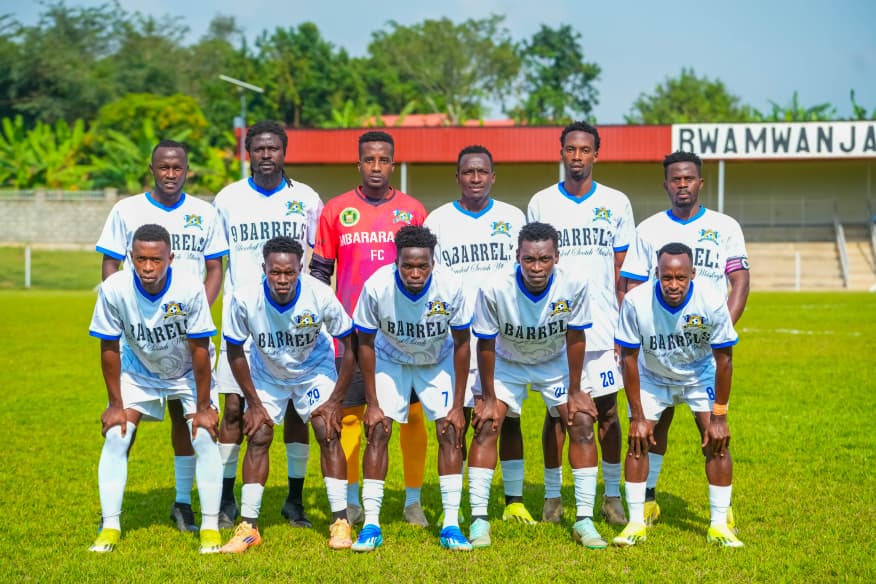

Mbarara City FC’s internal troubles were thrust into the spotlight on Saturday, January 24, as their Uganda Premier League outing against Lugazi FC in Kamwenge exposed a club fighting fires on and off the pitch.
What appeared, on paper, to be a manageable fixture instead turned into a sobering reflection of a team stretched to its limits.
Before a ball was kicked, the alarm bells were already ringing. Mbarara City submitted a matchday squad of just eleven players, no substitutes, no safety net, and zero room for mishaps. In a professional top-flight league, it was an extraordinary and worrying sight.
The clearest symbol of the club’s predicament came during the match when forward Clinton Kamugisha was deployed in goal.
While his performance was admirable, keeping a clean sheet and showing admirable courage.


The situation spoke less about versatility and more about desperation. Kamugisha’s commitment earned respect, but it also forced uncomfortable questions about how a Premier League side could reach such a point.
Beyond the ninety minutes, the issues run far deeper than selection headaches or tactical choices.
Persistent reports of unpaid salaries have emerged, revealing a dressing room under immense strain. Passion and loyalty may keep players going for a time, but prolonged financial uncertainty often leads to cracks that eventually become impossible to conceal.
The contrast with the club’s recent history is striking. Not so long ago, Mbarara City were a dominant presence in the Western region, with Kakyeka Stadium known as one of the league’s toughest grounds.
Now, they are hosting “home” matches away from Mbarara and struggling to field a complete squad, a decline that has been gradual, yet painfully evident.
In the aftermath of the game, the club announced the indefinite suspension of four players: Henry Kitegenyi, Ibrahim Thembo, Innocent Wafula and Fahad Emuran.
Management cited unprofessional conduct and damage to the club’s image, stressing that discipline and respect remain core principles.
However, the decision has only intensified debate around the club. While discipline is essential, many argue it cannot be viewed in isolation from player welfare and leadership responsibility.
When wages remain unpaid and uncertainty clouds the future, breakdowns within the squad are hardly surprising.
Mbarara City’s crisis is now out in the open, reflected in an empty substitutes’ bench, an outfield player between the posts and public disputes that hint at deeper unrest.